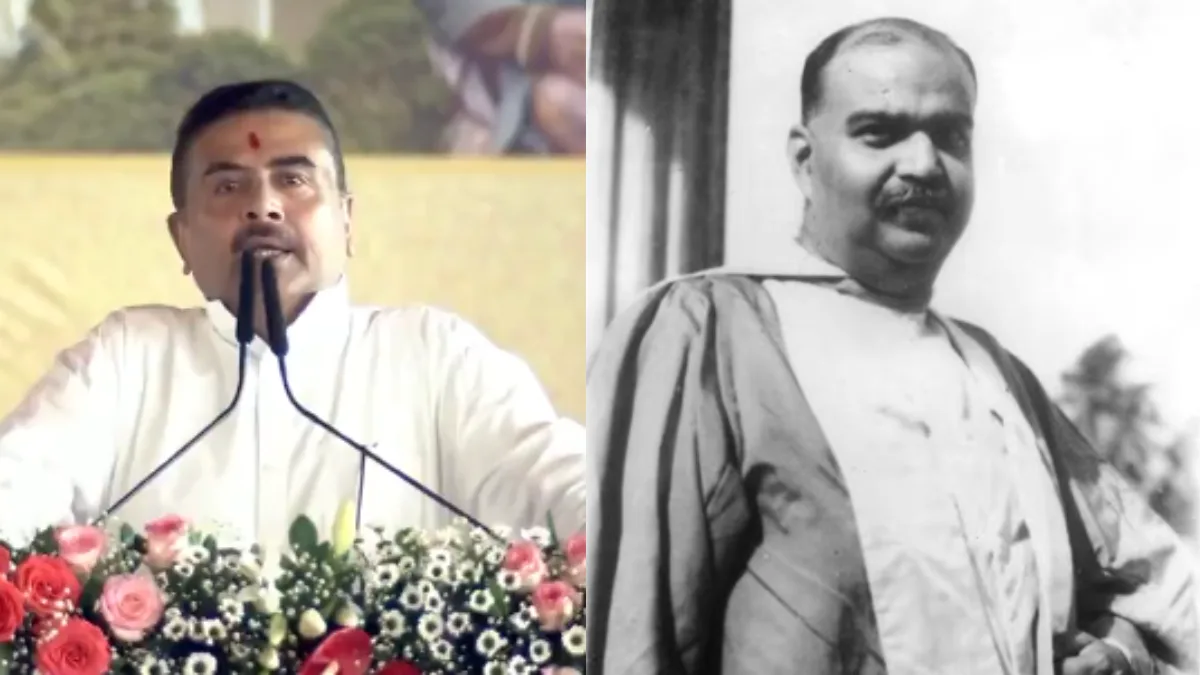
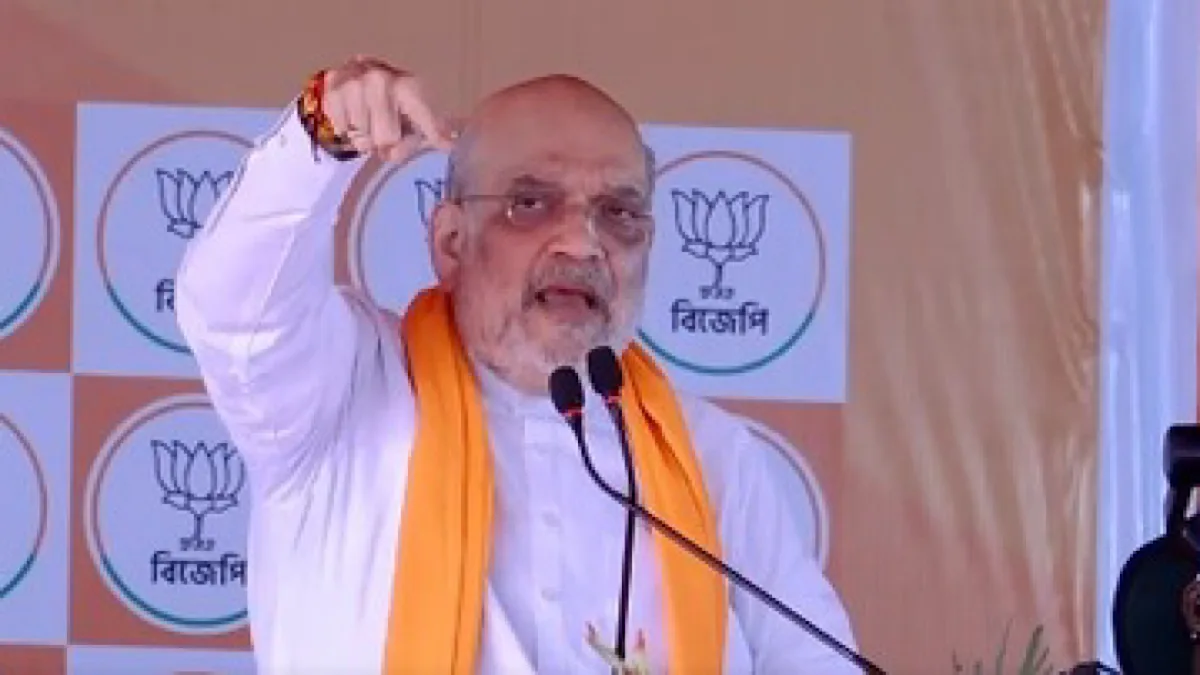
West Bengal Chief Minister Suvendu Adhikari on Saturday announced the installation of a 125-foot tall statue of Syama Prasad Mookerjee, who has been credited for leading the way for the creation of the state in 1947, on the occassion of the 125th birth anniversary of the Bharatiya Janata Party’s (BJP) ideological founder.
“June 23 will be celebrated as ‘Martyrs Day’ and we will celebrate July 6 on the occasion of the 125th birth anniversary of Dr. Syama Prasad Mookerjee,” Adhikari said speaking on the occassion of the state’s first Paschimbanga Divas on Saturday.
Advertisement
“Your nationalist government has decided to pay tributes to him by constructing a memorial, a library and a 125-foot tall statue of Dr. Syama Prasad Mookerjee in Kolkata to immortalise him,” he added.
How Syama Prasad Mookerjee played a key role in creation of Bengal
The bifurcation of Bengal and the subsequent creation of West Bengal owes its origin to the leadership of Shyama Prasad Mookherjee who championed the idea of a ‘Hindu homeland’ within the Indian union.
While several key leaders wanted a united soverign Bengal province, the Hindu Mahasabha leader, Shyamaprasad Mookherjee was sceptical about the idea of a “United Bengal” as it might lead to a permanent political subordination of the Hindus to the Muslim majority.
He feared that in united Bengal Muslims would certainly dominate Hindus both numerically and politically as it happened during the Krishak Praja party-Muslim League coalition government.
Mookherjee was also apprehensive about why Jinnah supported the move for a united Bengal. He thought that Jinnah who wanted East Bengal to be a part of his proposed Pakistan must have felt that a united sovereign Bengal under a Muslim majority would become an appendage of, and subsequently, a part of Pakistan.
Hence Mookherjee and the Hindu Mahasabha campaigned in favour of partitioning Bengal into a Muslim-majority state of East Bengal and a Hindu-majority state of West Bengal within India.
After a series of negotiations and top-level discussions the decision to partition Bengal was accepted by all parties. This ultimately led to the division of Bengal on 20 June, 1947, and the newly born state of West Bengal became an integral part of the Indian union in August 1947.
Saviour of Hindus
Mookerjee had the experience of Muslim oppression of Hindus during the Haque-Muslim League coalition in Bengal and feared that similar oppression would be there in a Muslim-majority united Bengal. Hence he is regarded by his followers as a saviour of Hindus.
Mookerjee had envisioned a “National Home” for Hindus, where they could find dignity and security after the 1947 Partition.